

Torsion Testing Machine
The Best Torsion Testing Machine Manufacturer!
Jinan Nake Test Equipment Co., Ltd. is a high-tech entity enterprise integrating R&D, production and sales established in July 2009.
Why Choose Us
Professional Team
Professional sales team and engineer team provide professional technical Support,Test video and Sample support.
World-wide Expertise
We know international markets and trends. Our expertise, experience and network cover all corners of the world.
We Always Deliver On Time
We genuinely understand the value of time in business and hence adhere to time and deliver all projects on time to our customers.
Customer Satisfaction
Providing after-sales services can enhance customer satisfaction by ensuring that customers' needs are met even after the purchase. This can lead to increased customer loyalty and positive word-of-mouth referrals.


What is Torsion Testing Machine
Testing machines for torsion testing are mainly used in science, research and teaching, in testing laboratories and in production control during production. They are used to determine the torque load of specimens made of different materials in static tests.
Accurate Measurement
These machines offer highly accurate measurements of torque, angle of twist, and other significant parameters. This level of accuracy is central to make sure the reliability and safety of materials used in famous and crucial industries like aerospace, automotive, and construction.
Versatile Testing
TTM can accommodate a wide range of materials, from metals and alloys to plastics, composites, and biomaterials. This versatility makes it an indispensable tool in research and quality control across diverse sectors.
Material Research
Engineers and researchers use TTM to study the behavior of materials under various torsional stresses. Understanding how materials respond to these forces aids in designing new materials with improved properties.
Quality Control
Manufacturers utilize this machine to ensure that materials meet industry standards and specifications. This step is essential to guarantee the consistent quality of products and prevent failures in the field.
Safety Assurance
In safety-critical applications, like medical devices and structural components, TTM helps evaluate the structural integrity of materials, thereby minimizing the risk of catastrophic failures.
Torsion Test Procedures: Step-by-Step Guide to Performing Torsional Testing
Prepare the Test Sample
Start by preparing the test sample, which is typically a cylindrical or prismatic shape. The sample should have a uniform diameter or cross-section along its length.
Mount the Sample
Next, mount the sample securely onto the torsion testing machine. This can be done using grips or clamps, ensuring that the sample is aligned accurately with the testing axis.
Set the Test Parameters
Before starting the test, set the desired test parameters such as the applied torque or angle of twist. These parameters will depend on the specific material being tested and the objectives of the test.
Apply the Torsional Force
Once the parameters are set, slowly apply the torsional force to the sample using the testing machine. This can be done by engaging the machine's motor or using a manual mechanism.
Measure the Torque and Twist
During the test, continuously monitor and record the torque applied to the sample and the resulting angle of twist. This data will provide insights into the material's behavior under torsional stress.
Continue Testing to Failure
If the objective is to determine the material's ultimate torsional strength, continue testing until the sample fails. This will help identify the maximum torque that the material can withstand before fracture or deformation.
Various Types of Torsion Testing Machine
Digital Torsion Testing Machines
A Digital Torsion Testing Machine tests tensile strength or elasticity. It is a type of torsion testing machine that helps evaluate the tensile strength of materials.
The device will determine how many kilograms it takes to break a sample of the material after being put under stress and stretched, giving you an idea of its elasticity.
It measures the resistance to twisting materials by measuring their torque-twist characteristics.
It helps to test construction materials, paperboard, rubber, textiles, and other materials that are subject to stress while being twisted.
The results provide information about a material’s stiffness and ability to resist cracking or breaking.
In the digital torsion testing machine, the output of the test is shown on a digital display, which gives us a direct reading.
Torsion Spring Testing Machine
The Torsion Spring Testing Machine is useful to test the strength of torsion springs which stores mechanical energy in twisting stress instead of compressive stress or tensile stress.
The machine can measure the maximum load capacity and the rate of elongation or contraction for spring by using different types of test samples.
Torsion Spring Testing Machine is a practical device to test the strength of the spring and ensure that it can withstand the given load.
A platen and upper head are gathered together with a base and lower head to form a complete model.
Torsion testing machines are mainly applied in mechanical industries like the automobile industry, aerospace industry, mining machinery industry, and other industries with significant demand for torsion springs.
Horizontal Torsion Testing Machine
A horizontal torsion testing machine uses a special spring to exert force and then measure the necessary torque to twist an object by a given angle.
In addition to providing a regular pulling or pushing power, it gives a twisting moment.
This additional capability helps the operator to determine both the shear and tensile strength of materials.
It conducts the test on the tensile and flexural strength of tools and materials for the automobile industry.
Vertical Torsion Testing Machine
The vertical testing machine is widely helpful in single column tests and two-column tests for engineering structures, such as nuclear power plant equipment, boilers, pressure vessels, bridges, large crane chassis, high-rise buildings, etc.
A vertical torsion testing machine helps determine the elastic properties, such as stiffness, toughness, and Young’s modulus.
The device employs a linear slide design for maximum torsional stiffness and minimal axial friction. It comes with a reaction torque transducer present to a movable tail stock that mounts on a linear slide, which applies force at the right angle to the axis of rotation.
Torsional Stiffness Testing Machine
A Torsional Stiffness Testing Machine is useful in determining the torsional stiffness of a particular material. It can be a plate, beam, or bar.
The machine applies a sinusoidal load to the specimen and measures the rotation of the model using an LVDT attached to the sample.
It is helpful to find the shear modulus of elasticity and determine failure pressures and strains.
It is used in the engineering and metallurgy industries to subject materials to torsion. Such a machine can be classified as either an instrumented torsional test system or an un-instrumented testing machine.
Old Vertical Torsion Testing Machine
An old vertical torsion testing machine is a device that measures a material’s shear modulus and damping.
It determines the modulus of elasticity and other mechanical properties of a material by applying a force along its axis and measuring the resulting torque.
The sample undergoes vertical oscillations at specified angular acceleration. It applies to the detection and quality control of the wire rope.
It is an important machine to determine how fast the materials get damaged by mechanical vibration, which helps design products with better endurance.
Axial-Torsion Testing Machine
Axial-torsion testing machine is a test machine for the torsional properties of shafts and other round parts.
It is used to measure the torque required to cause torsional deformation (twisting) of a specific area of a material.
It applies both torque and axial load (also known as axial force). The specimen can be one of many different shapes, such as round, square, triangular, rectangular, etc.
It does this by exerting a known force upon the sample and measuring the maximum amount of deformation (if any) that occurs before failure.
Optical Fiber Torsion Testing Machine
An optical fiber torsion testing machine is a helpful device for measuring the mechanical properties of an optical fiber.
It is a valuable tool to test the performance of fibers during construction and after installation.
It performs torsional tests on fiber optic cable under tension and temperature. The machine applies a specific amount of torsion to the test sample and measures the changes in attenuation of light propagating through it.
It allows you to test the mechanical properties of an optical fiber, which can help decide the best components to use when assembling a cable or designing a cable. The instrument is widely helpful in the production, maintenance, and quality control of optical fibers to ensure that they can satisfy their transmission requirements.
Wire Torsion Testing Machine
A wire torsion testing machine helps to determine the strength and elasticity of wire. The device measures the torque required to twist an object as a function of angular displacement under controlled conditions.
It measures the amount of twist imparted to a sample under controlled conditions as a function of applied torque.
It is also helpful in determining the amount of twisting strain that a wire can withstand without breaking.
It allows for precise measurement of the torque needed to turn a nut or bolt without imparting any other stresses to the material being tested.
It is used in physics experiments and resists by twisting the wire and measuring its breaking force and used in industrial research and development for materials characterization and product testing.
Analog Torsion Testing Machine
An analog torsion testing machine tests the material stress-strain response of manufactured products.
The product under test is loaded with an increasing load until failure occurs and the output is recorded as a function of applied force, displacement, or time.
An analog torsion testing machine is the most commonly helpful torsion testing machine.
It has high accuracy, easy to use, and has fast test results. Analog torsion testing machine comes with a high-precision potentiometer system that one can set to any angle for measuring and controlling torsion.
You can use this machine primarily to produce torque wrenches and indicators.
Cement Tensile Torsion Testing Machine
A cement tensile torsion testing machine is a kind of special equipment used for cement samples torque tests.
It has high accuracy, strength, and flexibility. The construction engineering site can use it to make the quality inspection of concrete mixers and the power of building materials, such as concrete and mortar cement plant products.
It tests the breaking strength and material elongation of the concrete. It measures the physical properties of high-performance concrete (HPC), such as compressive strength, flexural strength, modulus of elasticity, and many more.
Determine Torsional Strength
Understanding the maximum amount of torsional stress a material can endure before failure helps in selecting materials for specific applications where twisting forces are prevalent.
Measure Shear Modulus
By evaluating the material’s rigidity and how it deforms under shear stress, engineers can predict how the material will perform in real-world conditions.
Evaluate Torsional Stiffness
The relationship between the applied torque and resulting angular deformation provides insights into how resistant a material is to twisting, essential for designing components like axles and shafts.
Assess Brittleness and Ductility
Torsion testing can reveal a material’s tendency to undergo brittle failure or its ability to deform plastically without fracturing.


Investigate Fatigue Properties
In dynamic torsion testing, the material’s behavior under repeated or fluctuating twisting loads can be analyzed, essential for components subject to cyclic loading.
Compliance with Standards
Torsion tests help ensure that materials meet specific industry standards, contributing to quality control and safety.
Material Comparison and Selection
By comparing torsion properties of different materials, engineers and designers can make informed decisions in selecting the most suitable materials for various applications, such as automotive, aerospace, construction, and manufacturing.
Research and Development
Torsion tests are vital in the research and development phase, allowing scientists and engineers to explore new materials and innovative designs, ensuring that they can withstand the torsional forces they would encounter in their intended applications.
Maintenance Tips For Material Torsion Testing Machine
1. During the test, check whether the indicator light is correct;
2. Avoid heavy blows during use and handling, so as not to affect the measurement accuracy of the equipment;
3. The tightness of the chain of the material torsion testing machine is best to be checked every six months
4. The nuts of the equipment should be tightened regularly to avoid loosening;
5. The components of the equipment should not be moved randomly. Some electronic parts and circuit boards are very sensitive to static electricity. It is inevitable that there will be some static electricity on the human body, which may be damaged;
6. It is best not to place the material torsion testing machine in too humid environment and keep air circulating;
7. The operator should read the manual well to avoid damage to the equipment due to improper operation. Non-professionals should not easily operate and debug the equipment. Once the machine is abnormal, Stop the operation in time and get in touch with the technical staff in time.
Factors Affecting Torsion Testing Results
Material Properties
The inherent properties of the material, such as its density, ductility, and elasticity, significantly affect the results.
Specimen Geometry
The dimensions of the specimen, particularly its length and cross-sectional area, impact the torsion results.
Applied Torque
The magnitude and direction of the applied Torque can influence the degree of torsional deformation.
Temperature
The temperature at which the test is performed can affect the material’s behavior under torsional stress.
Rate of Loading
The speed at which the Torque is applied can impact the results, with faster rates potentially leading to higher degrees of twisting.
Pre-existing Stresses
Any residual stresses in the specimen from previous tests or manufacturing processes can affect torsion results.
Our Factory
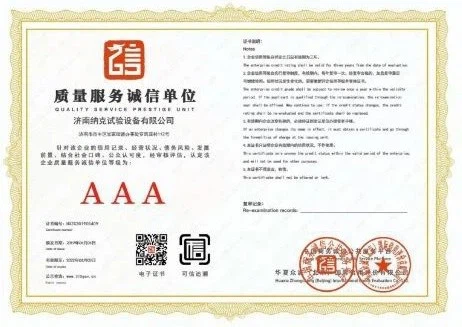
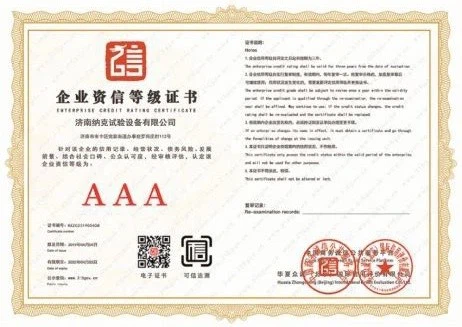
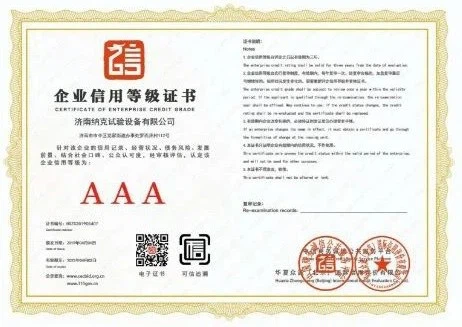
In 2018, the company was rated as an AAA credit rating enterprise; in 2019, it passed the ISO9001:2015 international quality management system certification. On August 17, 2020, it was rated as a national high-paying technology enterprise. In April 2022, it was rated as a specialized and special new technology enterprise in Jinan.



Certifications