

Rock Testing Machine
The Best Rock Testing Machine Manufacturer!
Jinan Nake Test Equipment Co., Ltd. is a high-tech entity enterprise integrating R&D, production and sales established in July 2009.
Why Choose Us
Experienced
As a specialized testing equipment manufacturer with over 20 years of industry experience, our company is backed by a team of more than 20 R&D experts, over 50 skilled production personnel, and a professional after-sales service team of 10+ members.
Our Certification
Our ISO 9001:2015-certified management system ensures consistent product quality.
OEM Customization
We provide OEM manufacturing services for 20+ Chinese exporters, producing around 2000 units of mechanical testing equipment annually, further solidifying our industry leadership.


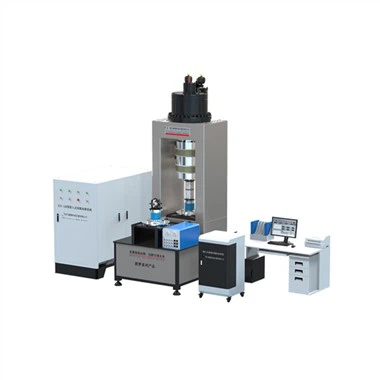
What is Rock Testing Machine
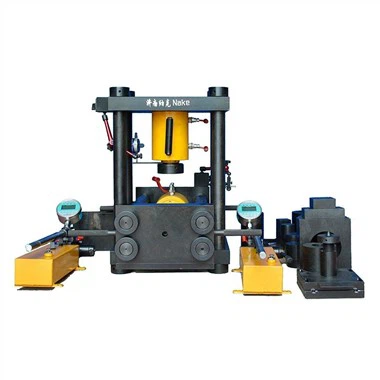
Rock testing involves determination of the strength as well as elastic properties with the help of rock testing machine. The rock material is prone to degradation and unexpected failure. The Construction activity in rocky area involves rock fills, slopes, deeper foundations, etc.
Benefits of Rock Testing Machine
Engineering Design and Build
Rock testing determines construction site suitability. Understanding rock strength, density, and deformation helps engineers design and build foundations.
Mining Exploration
Rock testing determines mineral quality and quantity in mining. Ore body characteristics help determine mining operations’ economic viability.
Develop Infrastructure
Designing roads, bridges, and other infrastructure requires rock testing. Geological conditions are considered during construction to prevent hazards and extend structure life.
Geology Research
Rock composition and formation data aid geological research. This data helps scientists study Earth’s geology and environment.
Uniaxial Compressive Strength Test
The uniaxial compressive strength (UCS) test is one of the most common methods for assessing rock strength. It involves applying a uniaxial load to a cylindrical rock sample until failure occurs. The UCS test provides a measure of the maximum compressive stress that a rock can withstand without fracturing.
Point Load Strength Test
The point load strength test evaluates the rock’s strength by applying a concentrated load to a small rock specimen. This test is relatively quick and inexpensive compared to other methods. It provides an estimate of rock strength based on the point load index.
Brazilian Tensile Strength Test
The Brazilian tensile strength test measures the tensile strength of rocks. It involves applying a diametral load to a cylindrical rock sample until it fractures. This test provides valuable information for applications involving tensile stresses, such as dam foundations and underground excavations.
Indirect Tensile Strength Test
The indirect tensile strength test evaluates the tensile strength of rocks indirectly. It involves applying a diametral load to a rock disk while restraining the axial movement. This test is particularly useful for assessing the tensile strength of rock cores and determining the mode of failure.
Shear Strength Test
The shear strength test assesses the rock’s resistance to shear forces. It involves applying a shear load to a rock sample until failure occurs. This test is essential for studying the stability of slopes, tunnel walls, and rock masses subjected to shear stress.
What Are The Key Factors And Criteria For Choosing Between Different Rock Testing Methods And Equipment
Project Objectives And Requirements
When planning rock testing, the first factor to consider is the purpose and scope of the project. Ask yourself what objectives and questions you want to answer, as well as what design parameters and criteria need to be determined or verified. Additionally, determine how accurate and reliable your results need to be. Depending on your project objectives and requirements, you may need different types of rock testing methods and equipment, such as uniaxial or triaxial compression tests to measure the stress-strain behavior and failure envelope of rock samples under different confining pressures; Direct shear tests to measure the shear strength and friction angle of rock joints or discontinuities; Brazilian tests to measure the tensile strength of rock samples by applying a diametral load; Ultrasonic tests to measure the elastic wave velocities and moduli of rock samples using sound waves; Or Schmidt hammer tests to measure the rebound hardness and roughness of rock surfaces using a spring-loaded hammer.
Rock Sample Size And Quality
When considering the size and quality of your rock samples, you should take into account how large and representative they are, as well as how intact and homogeneous they are. This can have an effect on the selection and performance of your rock testing methods and equipment. Larger, more representative samples can provide more realistic results but may require more sophisticated equipment. Smaller, less representative samples can be easier to test but can introduce uncertainties. Intact and homogeneous samples can be tested with standard methods but may not capture the effects of defects. Jointed and heterogeneous samples can be tested with specialized methods but may pose challenges in terms of sample selection, alignment, and measurement.
Rock Testing Cost And Time
When planning your rock testing, you should consider the cost and time involved. Assess the budget and resources available, as well as the timeframe for completion.consider how flexible and adaptable you are to changes and uncertainties. The cost and time of your rock testing can influence the choice of methods and equipment. More accurate and comprehensive methods may require more investment in personnel, facilities, and maintenance.less accurate methods may require more validation and calibration. More standardized methods may provide consistent results but need more compliance with regulations.less established methods can offer innovative results but require more development and verification.
Rock Testing Data Analysis And Interpretation
When considering the data analysis and interpretation of your rock testing, it’s important to consider how you will process and present the data, analyze and interpret it, and use and integrate it into your rock engineering design. This can affect the suitability and compatibility of your rock testing methods and equipment. More complex and diverse rock testing data can provide more insights but require more skills and tools to analyze. Simpler and less diverse data can provide more straightforward information but require more assumptions to interpret. More compatible data can provide more coherent information but require more alignment to fit into the design. Less compatible data can provide more independent information but require more reconciliation to incorporate into the design.
Rock Testing Best Practices And Recommendations
When considering the best practices and recommendations for your rock testing, you should consider the current standards and guidelines, common pitfalls and challenges, as well as proven tips and tricks. Following the standards and guidelines can ensure the quality and validity of your results, while avoiding pitfalls can prevent errors and failures that may compromise or invalidate your results. Applying proven tips and tricks can enhance the efficiency and effectiveness of your results, as well as the confidence in them.following these best practices can help you optimize your rock testing methods and equipment.
How to Properly Use Rock Testing Equipments
The Size and Quality of the Rock Samples
When evaluating the quality and size of the samples, take into account factors like their size, homogeneity, representativeness, intactness, and consistency within the same type of rock. This could have an impact on your equipment’s efficiency as well as the method you decide on for assessing rocks. To gather data from larger and more representative samples, more advanced rock testing equipments could be needed, although the advantages of more accurate results might exceed the expenses. Testing fewer, less representative samples may be simpler, but there is a chance that this could lead to more uncertainties.
Resources for Rock Testing Equipments
Prior to scheduling a rock test, estimate the time and cost required. It is crucial to consider the amount of time you have available, the resources you have, and the money you have available. Consider your adaptability and capacity to shift direction when faced with uncertainty and unpredictability. Your available time and financial resources will determine the instruments and methods you ultimately choose to use for your rock testing. More precise and extensive processes might require greater investments in infrastructure, maintenance, and manpower.
Examination and Interpretation of the Findings of Rock Testing Equipments
When planning the analysis and interpretation of your rock testing, you need to take into account the data processing and presentation methods, data analysis and interpretation procedures, and data use and incorporation into your rock engineering design. This could have an impact on the applicability and compatibility of your rock testing equipment and procedures. Understanding more about complicated and diversified rock testing results is worth the additional equipment and skills required.
Industry Impact of Rock Mechanics Testing
Construction and Infrastructure
In this sector, rock testing plays a critical role in the design of major structures such as dams, tunnels, and building foundations. Engineers can ensure the safety and stability of structures by understanding the strength, stiffness, and deformation properties of rock formations. In areas subject to seismic activity or other geological challenges, this testing is vital in order to identify potential hazards, such as unstable rock formations, which can then be mitigated through proper engineering practices.
Mining and Resource Extraction
The study of rock mechanics is a crucial part of mining engineering. It is used for assessing the stability of underground openings, designing safe excavation methods, and optimizing mineral resource extraction. By using testing, mining operations can be made more efficient by identifying the most appropriate excavation methods for different rock formations. Additionally, it assists in designing support systems for underground excavations and plays a vital role in the safe and efficient extraction of resources.
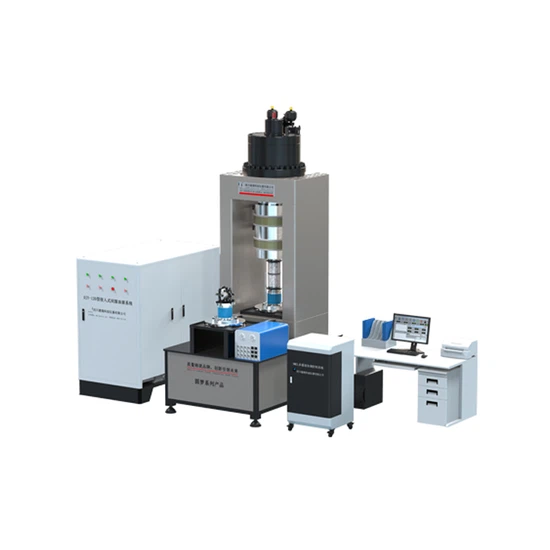
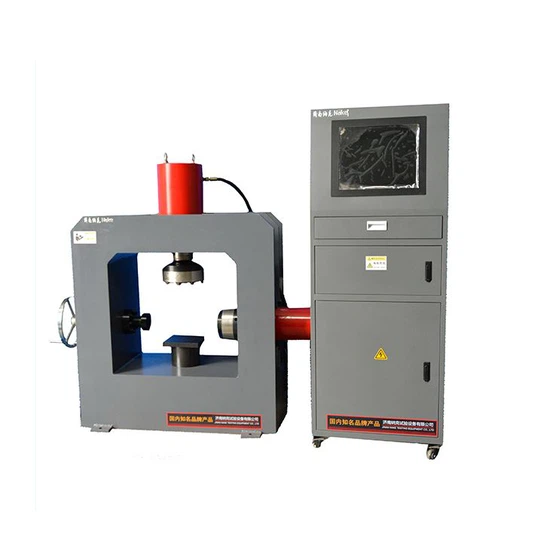
Energy Sector
Understanding rock properties through testing is essential for industries such as oil, gas, and geothermal energy. Testing rocks ensure operational safety and efficiency, particularly when designing drilling methods and assessing potential risks associated with resource extraction activities.
Environmental Engineering
Rock mechanics testing contributes to environmental conservation by assisting in the design of structures and excavation methods that minimize the environmental impact. As well as assessing natural hazards such as landslides and earthquakes, it is used to analyze slope stability for infrastructure projects such as roads, railways, and tunnels. In order to design tunnel supports and linings that are both safe and efficient, as well as optimize rock blasting operations for excavation and demolition purposes, this testing is essential.
Point Load Tester Market Size
The Point Load Tester Market refers to the industry involved in the manufacturing and distribution of devices used for determining the strength of rock and concrete materials. These testers apply a concentrated load to a small area of the material to measure its resistance to failure under pressure. They find applications in various sectors such as construction, mining, and geotechnical engineering. The primary function of these testers is to provide accurate data on the load-bearing capacity of rock and concrete samples, aiding engineers and researchers in making informed decisions regarding material selection and structural design. Opportunities in this market arise from the increasing demand for infrastructure development globally, particularly in emerging economies where construction activities are on the rise. With growing investments in infrastructure projects, there is a parallel demand for reliable testing equipment to ensure the safety and durability of structures.advancements in technology have led to the development of more precise and efficient point load testers, further fueling market growth.
Segmentation of the Point Load Tester Market can be done based on various parameters such as product type, application, and end-user industry. Product types may include portable point load testers, laboratory-grade testers, and automated testing systems. Each type caters to specific needs within the construction and engineering sectors. In terms of application, point load testers find use in geotechnical investigations, rock mechanics research, and material strength testing.segmentation based on end-user industry reveals a diverse market landscape encompassing construction companies, mining firms, academic institutions, and government agencies. This segmentation allows manufacturers and suppliers to tailor their offerings to meet the specific requirements of different sectors, thereby optimizing market penetration and revenue generation. Overall, the Point Load Tester Market presents lucrative opportunities driven by infrastructure development initiatives and technological advancements, with segmentation facilitating targeted marketing strategies and product development efforts.
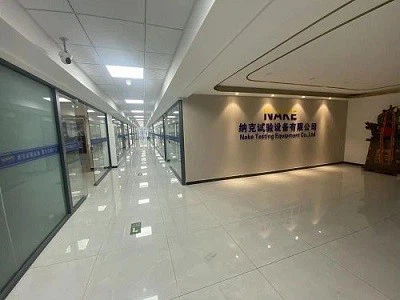
Our Factory
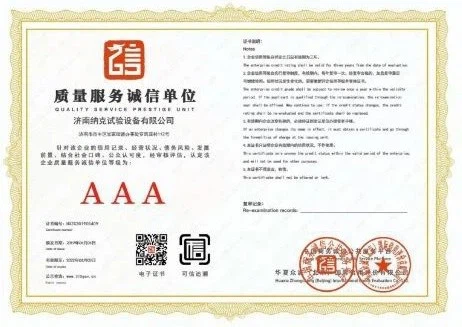
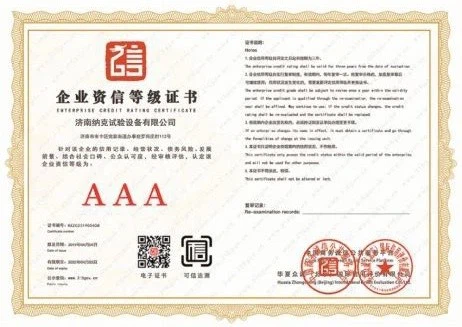
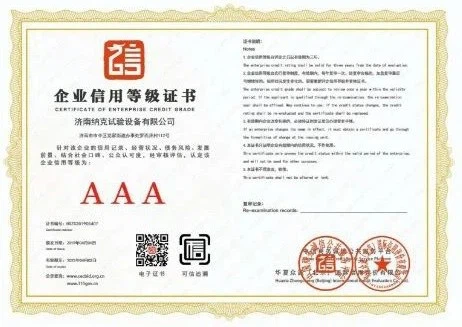
In 2018, the company was rated as an AAA credit rating enterprise; in 2019, it passed the ISO9001:2015 international quality management system certification. On August 17, 2020, it was rated as a national high-paying technology enterprise. In April 2022, it was rated as a specialized and special new technology enterprise in Jinan.


Certifications