

Bending Testing Machine
The Best Bending Testing Machine Manufacturer!
Jinan Nake Test Equipment Co., Ltd. is a high-tech entity enterprise integrating R&D, production and sales established in July 2009.
Why Choose Us
Experienced
As a specialized testing equipment manufacturer with over 20 years of industry experience, our company is backed by a team of more than 20 R&D experts, over 50 skilled production personnel, and a professional after-sales service team of 10+ members.
Our Certification
Our ISO 9001:2015-certified management system ensures consistent product quality.
OEM Customization
We provide OEM manufacturing services for 20+ Chinese exporters, producing around 2000 units of mechanical testing equipment annually, further solidifying our industry leadership.

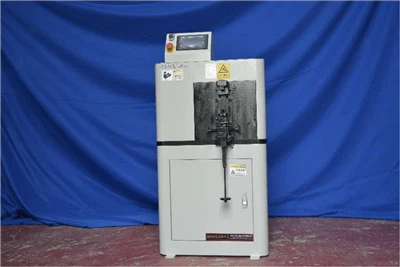


Bend test machines are typically universal testing machines specifically configured to evaluate material ductility, bend strength, fracture strength, and resistance to fracture. Bend tests tend to be associated with ductile metals and metal products.
Versatility
Bend tests can be performed on a variety of materials, including metal, plastic, ceramic, and composites, among others. This broad applicability makes it a useful tool across a range of industries, from construction and automotive to electronics and healthcare.
Simplicity
The test setup for bend testing is relatively simple and does not require complex equipment or procedures. This simplicity allows for quick and efficient analysis of material properties.
Cost-Effectiveness
Bend testing is typically more economical compared to other testing methods, such as fatigue testing or tensile testing, making it a cost-effective solution for understanding material behavior.
Comprehensive Data
Bend testing provides comprehensive data about a material’s flexural strength, ductility, and elasticity. It gives engineers a better understanding of how a material will react under different stresses and strains, enabling more informed decision-making during the design and manufacturing process.
Quality Control
The test can be used as part of a quality control process to ensure consistent material characteristics in production batches. It helps to detect any deviations in material properties that might affect product quality and performance.
Safety Evaluations
Bend testing can help predict potential failure points and ensure the safety of the end product or structure. By identifying a material’s strength and ductility, it allows manufacturers and engineers to design safer products and structures that can withstand anticipated stresses.
Predictive Analysis
Bend testing data can contribute to predictive analysis, helping to anticipate how a material will behave over time or under certain conditions. This can lead to improved product design, longer product lifespan, and reduced maintenance costs.
What Materials Can Be Subjected to Flexure/Bend Test
Metals
Various types of metals, including steel, aluminum, copper, and alloys, can be tested for their flexural properties.
Plastics
Different types of plastics, such as thermoplastics and thermosetting plastics, can undergo flexure testing to evaluate their bending behavior and strength.
Composites
Composite materials, which consist of a combination of different materials like fibers and resins, are often tested using flexure/bend tests to assess their mechanical properties.
Ceramics
Brittle materials like ceramics and ceramic composites can be subjected to flexure testing to determine their resistance to bending forces and evaluate their structural performance.
Wood
Wood and wood-based materials, including plywood and particleboard, can be tested for their flexural strength and stiffness.
Paper and Cardboard
Flexure tests are also performed on paper, cardboard, and other similar materials to assess their bending properties, stiffness, and resistance to deformation.
Bend test machines are mechanical testing equipment used to determine the bending properties and resistance of materials. These machines apply a three-point or four-point bending force to a sample to measure its strength, flexibility, and ductility. They are extensively used in various industries such as automotive, aerospace, construction, and manufacturing to assess the quality and performance of materials.
The global bend test machines market is expected to witness significant growth in the coming years. The market growth is primarily driven by the increasing demand for quality assurance and control in industries. With advancements in technology, the need for reliable and accurate testing equipment has become essential, which is boosting the market growth.
One of the major trends in the bend test machines market is the integration of automation and digitalization. Manufacturers are incorporating advanced features such as touch screen displays, digital programming, and automatic data analysis in their machines. This trend is enabling easy handling, improved accuracy, and faster testing processes, thereby driving the market growth.
The market is also witnessing the development of portable and handheld bend test machines. These compact and lightweight machines offer convenience in testing, especially in remote or on-site locations. The portability factor is anticipated to propel the demand for these machines in the coming years.
Stringent regulations and standards imposed by regulatory bodies for maintaining product quality and safety are fueling the demand for bend test machines. The automotive and aerospace industries, in particular, are mandated to conduct reliable tests to ensure compliance with quality requirements.
The bend test machines market is expected to grow at a CAGR of % during the forecast period. Factors such as increasing demand for quality assurance, automation and digitalization, portable testing equipment, and regulatory compliance are driving the market growth.

Bend testing machines perform these tests on universal testing standards with the help of most common product testing mechanism. This testing machine offer a number of testing practices in the high yielding industrial set ups. Flexural modulus in a bend testing machine is helpful to measures the slope of a stress curve and a material’s stiffness.
Another measurement option offered by bend testing machine is the measurement of Flexural Strength of the equipments. In this kind of testing, machine measures the maximum and overall force that a material needs. Measurement of yield point is another important thing that a bend testing machine provides to the industry. The machine contains a wide range of specimen clamps to support the testing measurements. The versatility of the clamps in the bend testing machine is best for any measurement of any configuration. The machine is suitable for testing a wide range of materials including Minerals, Metals, Composites and Plastics.
If you are looking for a well-designed bend testing machine, service providers in the domain are offering a widest ever variety of testing machines with several striking features altogether. If you approach a good manufacturer and an experienced service provider, you may expect a machine with the utilities like Quick-connect mounting fixtures, Vacuum port covers, Specimen heaters and coolers, Gearboxes for faster or slower speeds, Load and strain readout systems and a very strong 3- and 4-point bend fixture as well.
In the marketplace you can explore various manufacturers of the machines. You should however be careful while choosing the product. Go through more than one service provider and create a checklist of the features and utilities you are expecting in the product. Ask your service provider if he provides some illustrated features with the bend testing machines. These utilities include Maximum possible operating pressure of hydraulic, maximum possible speed of piston, measurable stroke of piston, accessible diameter of support rollers, perfect re-bending tools and the piston speed that machine uses during the measurement of the measurable contents. While purchasing a bend testing machine, you should look forward with a very careful approach to accomplish your choice. Create a checklist about the industrial requirements and budgetary constraints in a collective manner.
Bending Testing Machine Growth Drivers and Restraints
Stringent quality standards across various industries necessitate the use of bend testing machines to guarantee that materials meet the required specifications for strength and resistance to bending.
Advancements in technology are revolutionizing the market by enabling enhanced efficiency, accuracy, and automation in testing procedures. Features like digital controls, real-time data analysis, and automated testing are streamlining operations and minimizing human error.non-destructive testing methods and comprehensive data analysis software are further augmenting market growth.
The complexity of bend testing machines, especially with advanced features like automation and data analytics, necessitates substantial investment in research, development, and operator training. This complexity can lengthen installation times and pose challenges for small and medium-sized enterprises (SMEs) seeking to stay competitive.
The integration of advanced technologies often leads to higher equipment costs. Balancing affordability with innovation is crucial for manufacturers to remain competitive, particularly for budget-conscious end-users like educational institutions or smaller manufacturers.

What Is The Process For Performing A Bending Test
Prepare the Specimen: Cut a sample of the material with specified dimensions for the bending test.
Set Up Equipment: Install the specimen securely in the bending test machine.
Apply Load: Gradually apply force to the specimen until it bends or fractures.
Record Data: Measure the applied force and the corresponding bending deformation.
Evaluate Results: Analyze the data to determine the material's bending properties.
Repeat if Necessary: Conduct additional tests for accuracy and consistency.
Report Findings: Document the results, including any observed deformations or failures.
Differences Between Flexural Testing And Bend Testing
Flexural Testing
●Purpose: Flexural testing is primarily conducted to determine properties like flexural strength, flexural modulus, and flexural strain. It provides quantitative information on how a material will behave under bending loads.
●Methodology: Flexural testing usually involves applying a load at one or more points on a specimen supported at two ends (such as in three-point or four-point bending tests). The load is increased until failure, or until a specific deflection is reached.
●Measurement: The focus is on precise measurements of load, deflection, and sometimes strain, to calculate specific properties such as flexural strength and modulus.
●Standards: Flexural tests often adhere to specific standards like ASTM D790 for plastics, which outline the exact procedures to follow for consistency and comparability.
Bend Testing
●Purpose: Bend testing is typically a qualitative test used to evaluate a material’s ductility, toughness, or brittleness. It’s often employed in quality control to ensure that materials or products meet specific bendability criteria.
●Methodology: Bend testing often involves bending a specimen to a specified angle or around a specified radius. The focus is on whether the material can withstand the bending without cracking or breaking.
●Measurement: The main measurement might be the angle to which the specimen can be bent without failure, or the appearance of cracks or defects after bending to a specific angle. Quantitative measurements like stress and strain are generally not the focus.
●Standards: Bend testing also follows certain standards, especially in applications like weld testing (e.g., ASME IX for welder qualification bend tests).
Key Differences
●Focus: Flexural testing is more focused on quantitative measurements to characterize material properties, while bend testing is often more qualitative, assessing whether a material meets specific bendability criteria.
●Application: Flexural testing is widely used for material characterization and selection, whereas bend testing is commonly used for quality control, such as in weld inspection or assessing ductility in metals.
●Methodology: Although both tests involve bending, the specific procedures, loading conditions, and measurements can differ significantly.
Our Factory
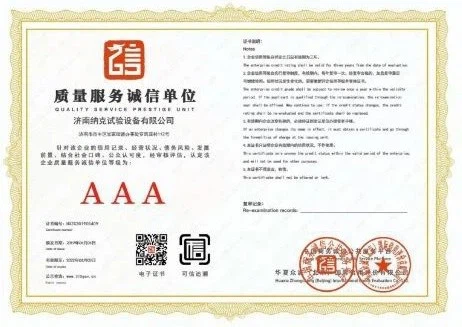
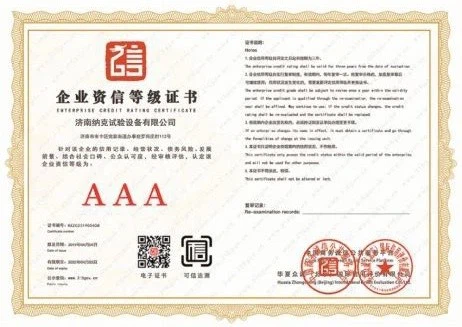
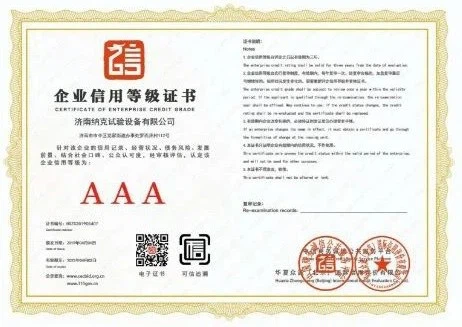
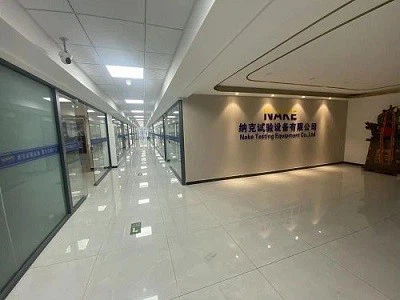
In 2018, the company was rated as an AAA credit rating enterprise; in 2019, it passed the ISO9001:2015 international quality management system certification. On August 17, 2020, it was rated as a national high-paying technology enterprise. In April 2022, it was rated as a specialized and special new technology enterprise in Jinan.


Certifications