

Hardness Tester
The Best Hardness Tester Manufacturer!
Jinan Nake Test Equipment Co., Ltd. is a high-tech entity enterprise integrating R&D, production and sales established in July 2009.
Why Choose Us
Experienced
As a specialized testing equipment manufacturer with over 20 years of industry experience, our company is backed by a team of more than 20 R&D experts, over 50 skilled production personnel, and a professional after-sales service team of 10+ members.
Our Certification
Our ISO 9001:2015-certified management system ensures consistent product quality.
OEM Customization
We provide OEM manufacturing services for 20+ Chinese exporters, producing around 2000 units of mechanical testing equipment annually, further solidifying our industry leadership.


What is Hardness Tester
Hardness tester, device that indicates the hardness of a material, usually by measuring the effect on its surface of a localized penetration by a standardized rounded or pointed indenter of diamond, carbide, or hard steel.
Benefits of Hardness Tester
Simplified Measurement
Automated hardness testing machines streamline the process, making it relatively straightforward to obtain hardness measurements.
Versatility
Hardness testing can yield meaningful readings across a broad spectrum of materials, ranging from soft to hard.
Direct Measurement
In certain applications, the material’s hardness stands as a crucial and directly measurable characteristic, eliminating the need for inference from physical properties.
What Are the Different Types of Hardness Test Methods
Rockwell: Developed to give a quick reading, mainly for metallic samples. The depth of the deformation made by the indenter is measured, and a deeper indentation is assigned a lower number, indicating a softer material. Two broad types of tests are used: the Rockwell superficial hardness and the Rockwell regular hardness tests.
Brinell: A spherical indenter is used, and the diameter of the resulting indentation is measured to give the hardness value. It is generally used for testing larger samples, or samples that are not perfectly homogenous since it causes a larger indentation that is less sensitive to local variations in material hardness.
Vickers: Uses a diamond pyramid to make a square indentation on the surface of the material being tested. The diagonal of the indentation is measured optically and is converted to the hardness value. The Vickers hardness test can be applied for micro-testing.
Knoop: Specifically used to test thin or brittle materials, as it gives a meaningful reading with a shallow indentation. It uses an elongated pyramid to make the impression, with the measurement of the long diagonal used to calculate the Knoop hardness. It is used for micro-hardness testing.
Mohs: A scale from 1 to 10 that provides an indication of the relative hardness of minerals based on how easily they can be scratched. A mineral’s hardness is measured by attempting to scratch it with materials of known Mohs hardness and ranking it accordingly.
Shore: Is used for softer materials such as elastomers and plastics. A spring-loaded indenter (called a durometer) is pressed into the material sample, and the depth of penetration is converted to a hardness value.
7 Types Of Hardness Testers
Rockwell hardness testers
Rockwell hardness testers are the most commonly used of all the types of hardness testers. The Rockwell method offers a quick and accurate measure of hardness on almost all metals and some plastics
Brinell hardness testers
It is the oldest method still in use today in different types of hardness testers. It often used to measure the thickness of items with a coarse surface structure, such as castings and forgings, where it produces the most accurate readings.
Vickers hardness testers
They are types of hardness testers that have a wide-ranging scale, while low forces and a shallow indentation enable the measurement of soft metals and thin materials such as foil. They are also used to measure small individual parts or small sections of larger samples.
Knoop hardness testers
An alternative to Vickers, the Knoop hardness test is a microhardness test used particularly for very brittle materials or thin sheets. The small size and shape of the indenter on these types of hardness testers allow this. The diamond shape is elongated, increasing the surface area of the indentation. This spreads the force out, and a less concentrated force area means the brittle materials are less likely to break under test. Thin ceramics are an example of this.
Shore hardness testers
Shore hardness testers (shore durometers) are types of hardness testers used for measuring the hardness of rubbers and plastics. There are generally two further subcategories of Shore hardness types that include Shore A and Shore D.
Webster hardness testers
The Webster hardness testing method originated in the United States. It is used in small hand-held devices, where force is applied from a spring-loaded handle. Webster testers are types of hardness testers that are easy and quick to use, with the hardness result read directly from the indicator with a simple clamp.
Leeb hardness testers
Standardised in ASTM A956-17, Leeb hardness testers are suitable for testing larger workpieces, over 5KG. Suitable for use on most metallic materials, the sample must have a prepared, smooth finish for an accurate reading.
The test load
This is determined by the hardness of the material. Metals such as steel or alloys,require test loads of up to 3,000 kgf, while soft metals require only 500 kgf. The higher the load, the higher the accuracy. It is important to note that the impression should not exceed 1/10 of the thickness of the sample.
The hardness range
Determines the material of the indenter. Over 650 HB/30 hardness, you should favor a diamond indenter. Below this value, steel or hard metal indenters are suitable.
The accuracy level
Depends on the surface to be measured (cleanliness, flat surface, static or dynamic system, etc.).
The adaptibility of the device
Its importance varies according to the shape and size of the samples to be tested.

What is Hardness Tester Used For
Metallurgy and Manufacturing. In the field of metallurgy, hardness testers play a pivotal role in quality control and material characterization. Manufacturers use hardness tests to assess the strength and durability of metal components such as gears, shafts, bearings, and tools.the Brinell hardness test involves indenting a material's surface with a hardened steel ball and measuring the diameter of the resulting impression. This method is commonly employed for testing castings and forgings, ensuring they meet the required hardness specifications.
Automotive Industry. In the automotive sector, hardness testers are used to evaluate the hardness of critical components like engine parts, brake systems, and transmission components. Ensuring optimal hardness levels in these parts is essential for their longevity and performance. Hardness tests help manufacturers identify materials prone to wear and tear, leading to improved vehicle safety and reliability.
Aerospace Engineering. The aerospace industry demands materials with high strength and durability due to extreme conditions experienced during flight. Hardness testing is used to examine aircraft components such as turbine blades, landing gear, and structural elements. By accurately determining hardness, engineers can prevent failures caused by excessive stress, fatigue, or corrosion, ensuring the safety of air travel.
Construction and Civil Engineering. In construction, hardness testers are employed to assess the quality of building materials like concrete and asphalt. The rebound hammer test, a non-destructive method, measures the surface hardness of concrete structures, providing insights into their compressive strength and durability. This information is vital for maintaining the structural integrity of buildings, bridges, and roads.
Material Science Research. Hardness testing is fundamental in material science research and development. Scientists use it to study the behavior of newly developed materials, alloys, and composites. By analyzing the relationship between hardness and other mechanical properties, researchers gain insights into a material's potential applications in various industries, from electronics to medical devices.
Quality Control in Electronics. The electronics industry relies on hardness testing to ensure the reliability and performance of components like microchips, connectors, and circuit boards. Proper hardness levels are crucial to prevent damage caused by mechanical stress or thermal expansion. Hardness testers aid in identifying materials susceptible to deformation or cracking under the conditions these components experience.
Oil and Gas Industry. The oil and gas sector often deals with harsh and corrosive environments. Hardness testers are utilized to evaluate the hardness of pipeline materials, drilling equipment, and refinery components. This ensures that these materials can withstand the stresses imposed by drilling, transportation, and processing of oil and gas resources.
How to Maintain Hardness Tester
Regular Cleaning. The first and foremost step in maintaining hardness tester is regular cleaning. Dust, dirt, and contaminants can accumulate on the surfaces of the machine, affecting its accuracy and performance. Use a soft, lint-free cloth to wipe down the exterior and interior components, such as the indenter, anvil, and other moving parts. Avoid using abrasive materials that might scratch the surfaces.
Calibration and Verification. Calibration is crucial to maintaining the accuracy of your hardness tester. Regularly calibrate the machine using certified calibration blocks or samples with known hardness values. This ensures that your instrument is providing reliable results. Verify the accuracy of the measurements by comparing them with reference hardness standards. If discrepancies are detected, take appropriate measures to recalibrate the device.
Lubrication. Proper lubrication of the moving parts is essential to ensure smooth operation and extend the lifespan of your hardness tester. Over-lubrication can attract dirt, while under-lubrication can lead to increased friction and wear. Keep a record of the lubrication schedule to maintain consistency.
Routine Inspections. Perform routine inspections to identify any signs of wear, damage, or misalignment. Check for loose screws, bolts, or other fasteners that might affect the stability and accuracy of the machine. Inspect the cables and connections for any signs of fraying or damage. Address any issues promptly to prevent further damage and ensure the reliability of your hardness tester.
Environmental Conditions. Maintaining suitable environmental conditions for your hardness tester is vital. Avoid exposing the instrument to extreme temperatures, humidity, or direct sunlight, as these factors can adversely affect its performance and accuracy. Store the hardness tester in a controlled environment when not in use to prevent unnecessary wear and tear.
User Training. Proper training of the users is essential for both accurate measurements and the longevity of the hardness tester. Ensure that operators are well-trained in using the instrument correctly, as improper usage can lead to premature wear and inaccurate results. Provide guidelines on handling, cleaning, and basic troubleshooting to minimize the risk of user-induced issues.
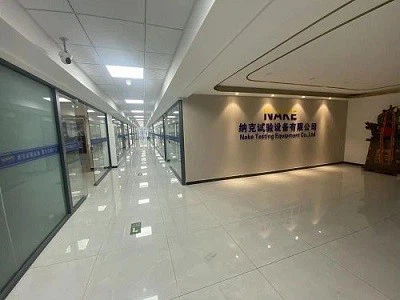
Our Factory
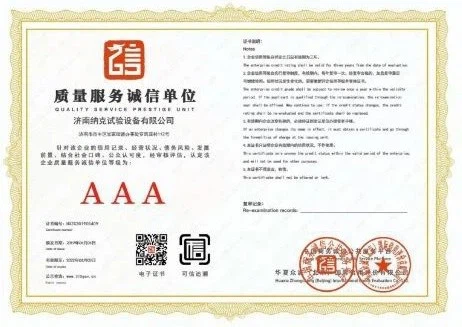
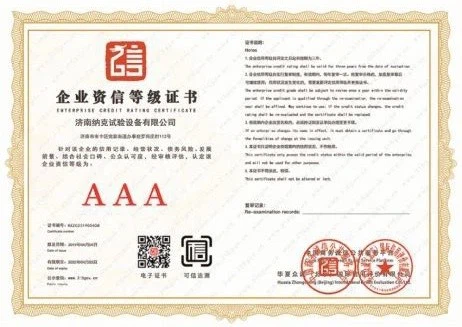
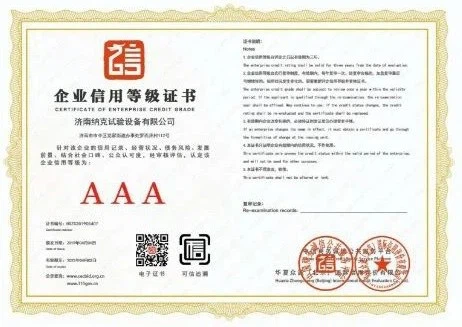
In 2018, the company was rated as an AAA credit rating enterprise; in 2019, it passed the ISO9001:2015 international quality management system certification. On August 17, 2020, it was rated as a national high-paying technology enterprise. In April 2022, it was rated as a specialized and special new technology enterprise in Jinan.


Certifications