



Electronic Extensometer
Electronic extensometer
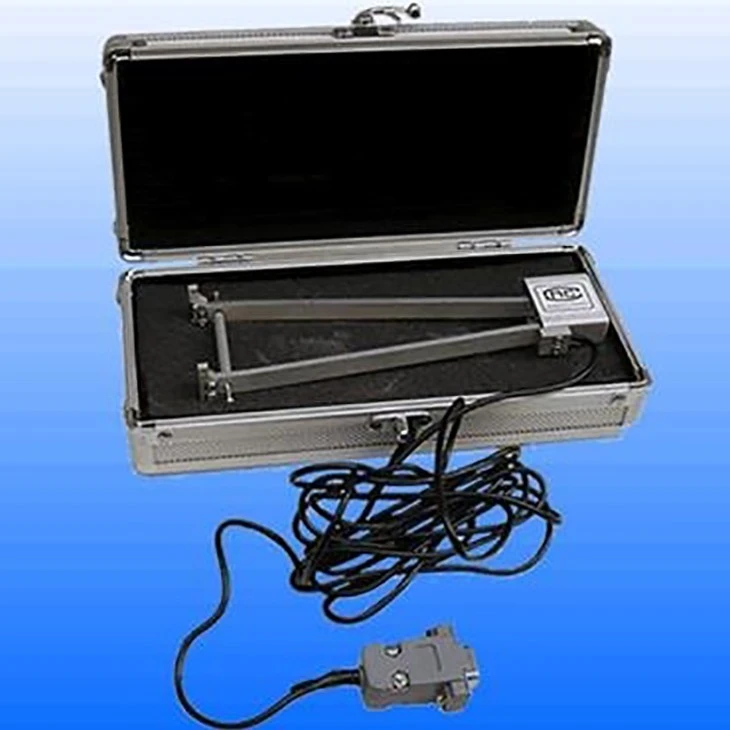
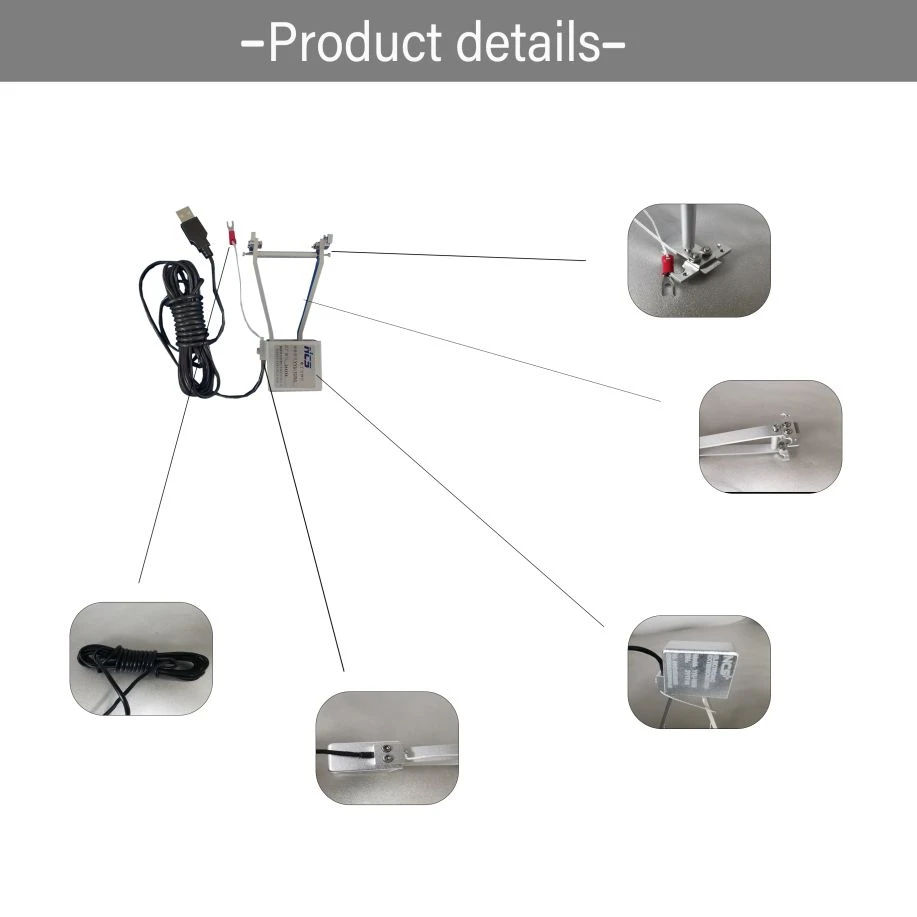
This series of electronic extensometers are resistance strain extensometers, which are used to measure the linear deformation between two points after the sample or component is stressed. When the extensometer is stretched, the elastic body is deformed and the resistance value of the strain gauge attached to it changes. The original balance bridge is out of balance and outputs a voltage signal output proportional to the deformation, which is then amplified, converted and processed by a computer. data processing.
The electronic extensometer has the characteristics of high precision, high sensitivity, good stability and convenient use. The products have extensometers with 0.5 and 1.0 accuracy, which can be used for static and dynamic mechanical performance tests.
Main use:
1. It is suitable for testing metal and non-metal materials;
2. It is suitable for measuring elastic mold E, specified plastic elongation strength Rp, specified total elongation strength Rt, various elongation ratios, strain hardening index n and other parameters:
3. It is suitable for measuring fracture mechanics and lateral deformation, measuring Poisson's ratio μ, plastic strain ratio r, Kic, COD and other parameters;
4. It is suitable for measuring torsional shear modulus G and specifying non-proportional torsional stress τp.
Use method:
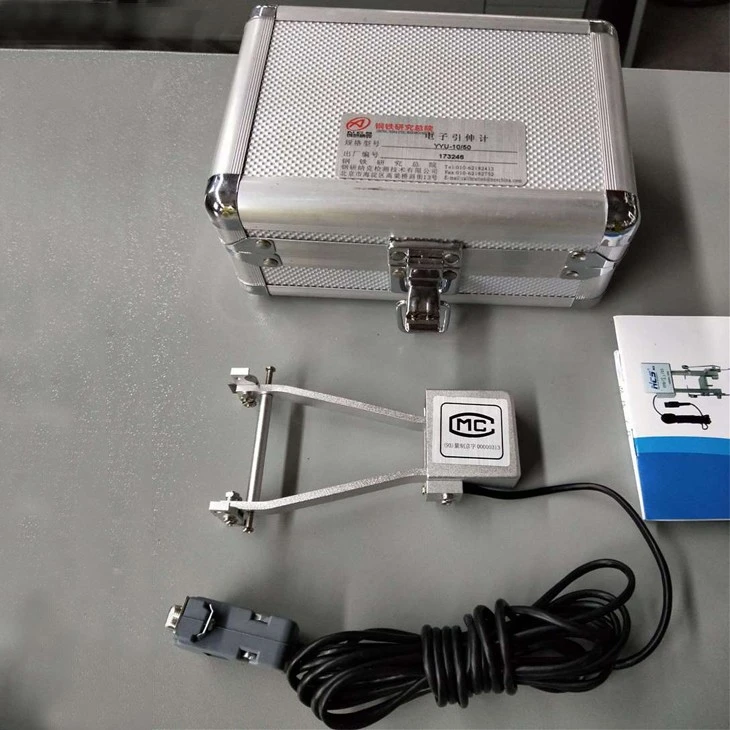
1. YYU series extensometer installation card: gently pinch the two lever arms of the extensometer with two fingers, so that the gauge rod is in contact with the lever arm, and insert the opening of the attached gauge length between one of the lever arms and the gauge rod , and fix the extensometer on the sample with a rubber band through the extensometer hook. Note: The clamping force should be appropriate, and the centerlines of the two knife edges should be parallel to and centered on the axis of the specimen. After checking that it is correct, remove the gauge length piece and keep a gap of about 0.5mm between the moment arm and the gauge length rod.
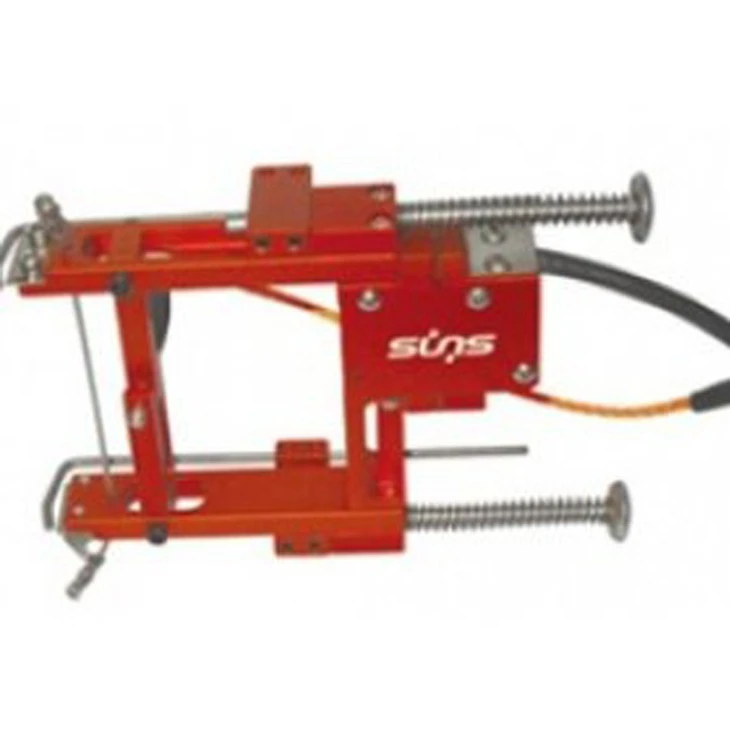
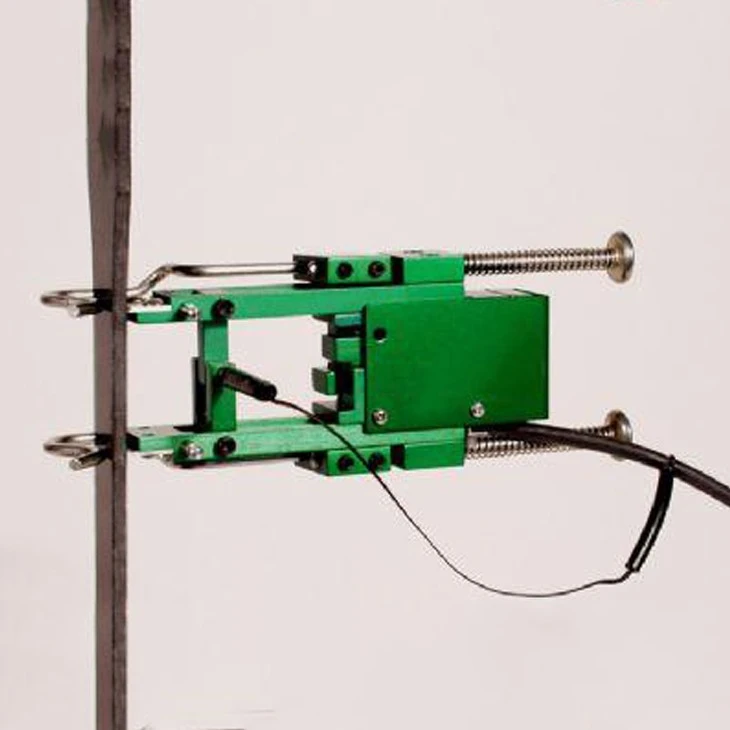
2. Mounting of the YYS series extensometer: put the attached gauge length pin in the pin hole of the force arm to ensure the accuracy of the gauge length. The extensometer is fixed to the specimen with a spring, and can also be clamped with a rubber band. When ensuring the correct and stable installation of the extensometer, remove the gauge length plug and conduct the test.
3. Mounting of YYJ series extensometers: Pinch the two force arms, and use the elastic force of the elastic body to mount it between the knife edges of the sample. Note: Do not use over deformation, so as not to damage the extensometer.
Special attention: When clamping with springs or rubber bands, be sure to select an appropriate clamping force. Any clamping method during clamping requires that the centerline of the two knife edges be parallel to the axis of the sample and centered. The clamping state of the spring or rubber band can be adjusted.
Basic parameters:
1. Strain gauge resistance: 350Ω
2. Supply bridge voltage value: ≤6V (DC and AC can be used)
3. Output sensitivity: about 2mV/V
4. Extensometer gauge length: YYU series 10~500mm; YYJ series 5~25mm;
5. Deformation: YYU series 100mm; YYJ series 10mm
6. Output connector: conventional four-pin, five-pin or USB and other plugs, can also be customized according to user requirements.
7.Commonly used extensometer gauge length: 25/50/100/200 mm.



Hot Tags: electronic extensometer, China electronic extensometer manufacturers, suppliers, Displacement Sensor, Draw Wire Encoder
Previous
No InformationYou Might Also Like


Send Inquiry