


In metallic materials testing, the Charpy pendulum impact test is the core method to evaluate material toughness and assess susceptibility to brittle fracture. It is widely adopted for steel, castings, forgings, fasteners, railway components, pressure vessels, construction machinery and offshore structural materials.
Many of our overseas customers struggle when selecting pendulum capacity: available options cover 150 J, 250 J, 300 J, 450 J, 500 J, 600 J and 750 J. A common mistake: choosing too small a pendulum fails to fracture specimens completely; selecting an oversized pendulum leads to degraded test accuracy and higher measurement uncertainty.
Below we break down the selection logic to help you match the correct Charpy machine quickly.
1. What does pendulum energy (Joule, J) mean?
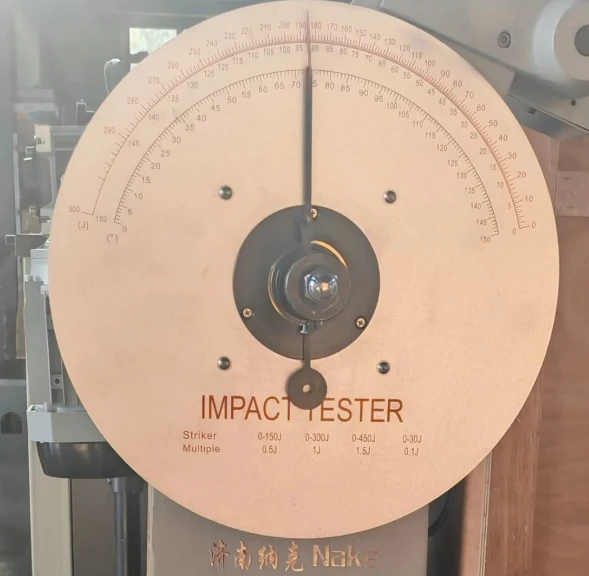
Joule (J) refers to the maximum potential energy the pendulum can release upon striking the specimen.
Per EN ISO 148-1 / ASTM E23, the absorbed energy shall not exceed 80% of the pendulum nominal capacity. For routine lab quality control, our field recommendation: keep the measured absorbed energy within 20%–80% of pendulum energy. This avoids the two ends of the range and delivers stable, repeatable results.
Example: Expected absorbed energy = 100 J Valid pendulum range for the 20–80% working window: 125 J ~ 500 J.
250 J: 40% loading. Limited upper margin; easy to exceed capacity for tougher specimens.
450 J: 22% loading. Close to the lower bound; small energy readings will fall outside the preferred window.
300 J: ~33% loading. Balanced margin on both sides, best all-rounder. For specimens expected at ~100 J, 300 J is the preferred choice.
Standard Charpy specimen: 10 mm × 10 mm × 55 mm with V-notch or U-notch. Sub-sized specimens (7.5 mm, 5 mm) are used for thin sheets and small profiles. Reduced cross-section gives lower absorbed energy for the same material. Important: Support span must be changed to match specimen thickness. Mixed setups invalidate the test.
2. Application map for each pendulum rating
150 J Aluminium alloys, copper alloys, non-ferrous metals, low-toughness light alloys and small thin specimens. Best suited for non-ferrous labs; rarely used for carbon steel.
250 J Mild carbon steel, Q235 equivalent grades, thin-gauge steel, low-strength alloy steel, typical absorbed energy 50–200 J. Popular in university labs and inspection facilities, cost-effective.
300 J Structural carbon steel, castings, fastener impact testing. Standard configuration for many third-party testing laboratories. Great versatility, widely used for construction and mechanical component labs.
450 J / 500 J High-strength low-alloy steel, pressure vessel plate, construction machinery steel, rail steel, forgings. Common for pressure equipment and wind energy supply chain manufacturers. The most popular industrial grade for overseas inquiries, covering medium-to-high toughness steel.
600 J Heavy-wall pipe, high-strength alloy forgings, high-toughness steel for low-temperature service, heavy machinery components. Specimens normally show high absorbed energy; selected by steel mills and heavy foundries.
750 J High-toughness heavy plate, large cast & forged parts, ship plate, offshore steel. Large pendulum mass, specified by steelworks and heavy industry; seldom required by general commercial labs.
Flexible modular design: Many of our models support interchangeable original pendulums. Example: A 500 J host can be fitted with a 250 J pendulum, covering two energy ranges on one machine to reduce capital cost.
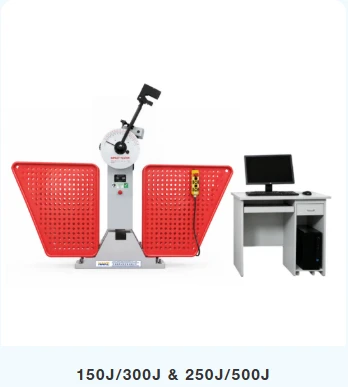
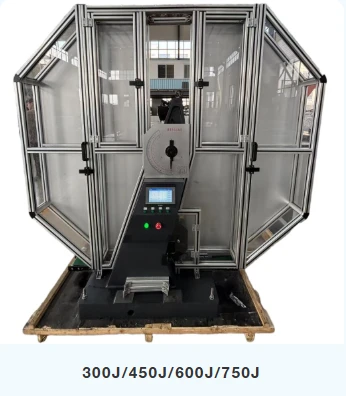
Note: Pendulum swap is only allowed on compatible frames. After replacement, reverification/calibration is mandatory.
3. Beyond pendulum energy: Critical factors you must not overlook
3.1 Test temperature: Ambient or cryogenic impact
If you need testing at -20 °C, -40 °C, -60 °C down to -196 °C, a cooling bath system is required in addition to the main frame. Specimens must be held at target temperature and transferred for impact rapidly.
EN ISO 148-1 specifies tight transfer timing: from leaving the cooling medium to impact completion within 5 seconds. Manual operation is error-prone for cryogenic batches. High-volume low-temperature testing strongly recommends automatic feeding models.
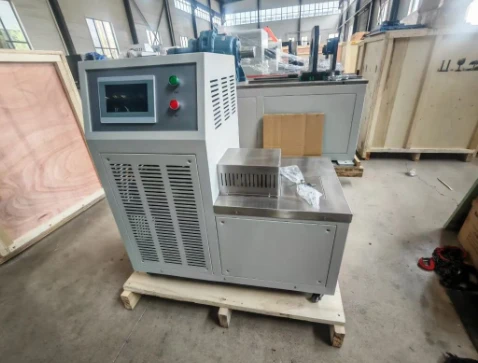
Mechanical refrigeration bath: Stable from -20 °C to -80 °C. Plug-and-play, no consumables, consistent temperature control. First choice for routine -40 / -60 °C production testing at test houses and steel mills. Limitation: cannot reach below -100 °C.
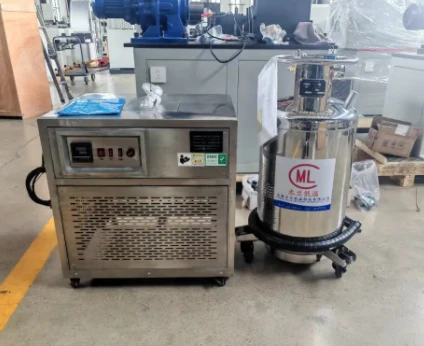
Liquid nitrogen cooling: Down to -196 °C, fast cooling. Mandatory for LNG, offshore and aerospace ultra-low-temperature programmes. Nitrogen is a consumable; higher running cost for frequent use.
3.2 Automation level: Semi-automatic vs Fully automatic
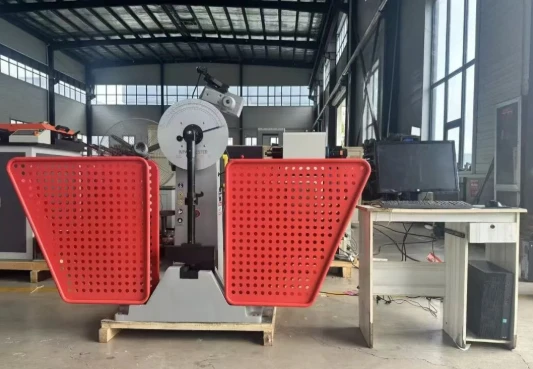
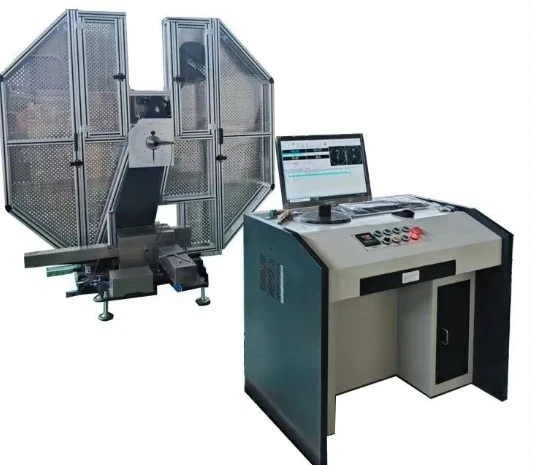
Semi-automatic: Manual specimen loading. Cost-efficient, the mainstream pick for small and mid-sized labs.
Fully automatic: Magazine feeding, continuous test sequence. Designed for high throughput: third-party labs, steel mill production inspection lines.
3.3 Striker radius: R2 mm / R8 mm - NOT interchangeable
Striker geometry is a frequent audit non-conformity item:
R2 mm striker: Default for base metal Charpy tests per EN ISO 148-1 and ASTM E23; for steel, forgings, pressure vessels and rail substrate testing.
R8 mm striker: Required for weld metal and heat-affected zone (HAZ) impact testing (ISO 15792, welding test standards).
If both base metal and weld tests are required, prepare matched strikers or two sets.
Always confirm striker radius against the project specification for export orders.
3.4 Instrumented Charpy option
Standard machines output only total absorbed energy KV/KU, sufficient for routine incoming inspection and type approval. No need for instrumented upgrade if force-displacement curve is not specified.
Instrumented Charpy captures force-displacement traces, separating crack initiation energy and crack propagation energy. It supports FATT (Fracture Appearance Transition Temperature) measurement, fracture mechanism research and advanced qualification for nuclear, marine and defence projects.
Jinan Nake Charpy Pendulum Impact Testers Available ratings: 150 J, 250 J, 300 J, 450 J, 500 J, 600 J, 750 J Compliant with EN ISO 148-1, ASTM E23, also GB/T 229-2020.
Optional: cryogenic cooling systems, automatic feeding, instrumented striker, interchangeable pendulum sets.


