


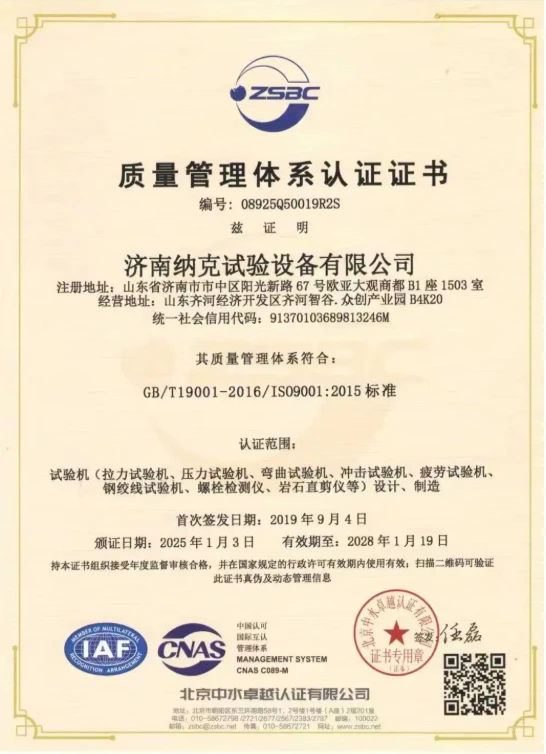
An expert audit team from the certification body recently visited Jinan Nake Testing Equipment Co., Ltd. to conduct a quality management system re-certification audit against GB/T 19001-2016 / ISO 9001:2015, Quality management systems - Requirements.
Following the opening meeting, document review, shop-floor inspection, staff interviews and the closing meeting, the audit team concluded: the company's quality management system is operating effectively, and this re-certification audit has been successfully passed.
For a manufacturer of testing machines sold both at home and abroad, the certificate is more than a compliance badge. It is a passport. Many overseas tenders, framework agreements and buyer qualification processes require a valid ISO 9001 certificate as a precondition, and a timely renewal keeps Nake's documentation acceptable to customers, distributors and third-party inspection bodies without interruption.
The opening meeting: what a "system" really means
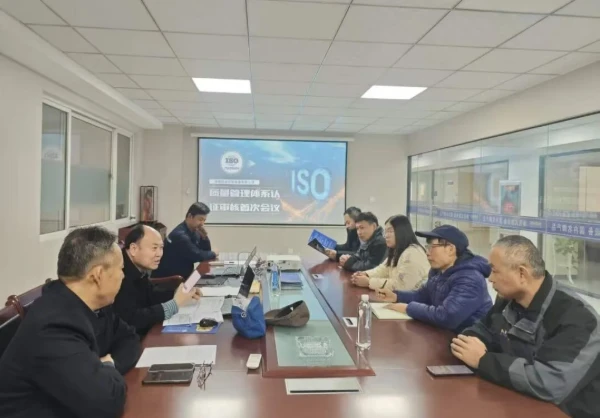
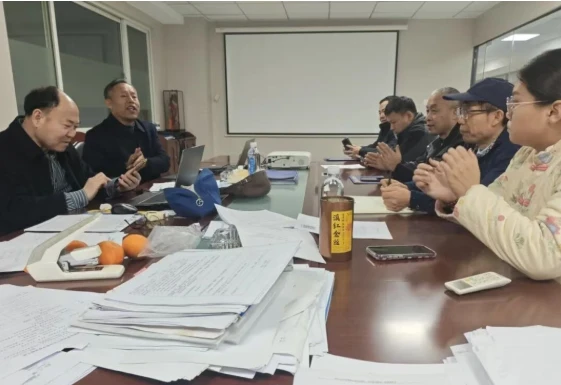
The audit began with an opening meeting, where the auditor set out the basis, scope and acceptance
criteria of the audit, together with the evidence that would be required: production and sales records, purchase and sales contracts, staff training records and special-equipment operator certificates.
"The audit verifies whether what you say and what you do are the same thing."
That plain sentence gave the managers present a far more concrete understanding of the word "system." A standard is not something written on paper. It is behaviour that can be checked in every contract, every process step and every record.
The audit follows the whole process, not a single station
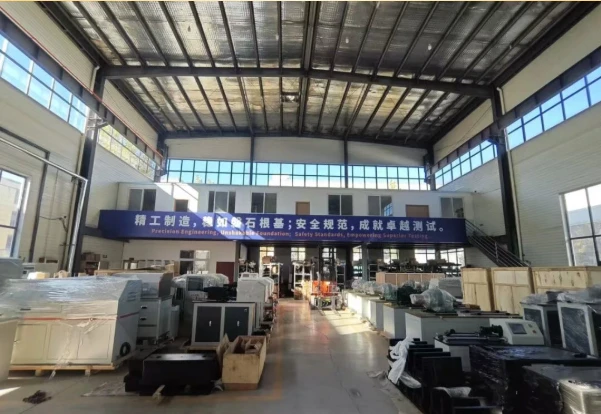
A testing machine is precision measuring equipment. Its quality has to be built in from contract review onwards, in line with defined procedures; it cannot be screened out at the final inspection alone. The audit followed exactly that chain.
1. Contract review.
Are the technical parameters, delivery schedule and acceptance criteria of an order identified before signing? Do we have the capability to take on special requirements?
2. Purchasing.
Has the purchasing department established an approved supplier list? Do purchase contracts, processing records, incoming inspection records, warehousing verification sheets and transaction records correspond one to one?
3. Production and assembly.
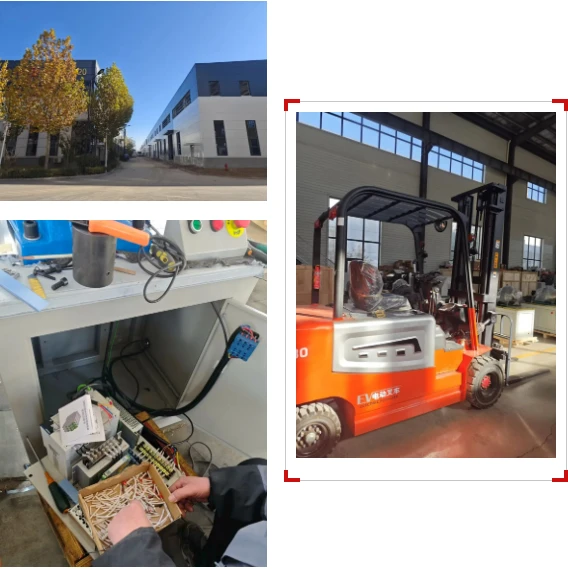
Are product specifications, models and packaging complete, and are in-process inspection records retained? Components assembled in-house, such as electrical cabinets, must have traceable assembly records.
4. Final inspection.
Tests are organised according to national standards. Indication error, inspection items, inspector and inspection time must all be recorded, and the manual, certificate of conformity and factory inspection report supplied with the product.
5. Nonconforming product control.
Customer feedback must be traced to root cause, with corrective action defined and re-verified after improvement until the customer is satisfied.
Against GB/T 19001-2016, these steps correspond to control of externally provided processes, products and services (8.4), production and service provision (8.5), release of products and services (8.6), control of nonconforming outputs (8.7) and improvement (10.2). What the auditor examined was whether these links connect - not merely whether any single station performs well.
Quality and profit: a simple sum
Throughout the audit the auditor returned to one principle: make products that satisfy the customer.
He put the economics plainly to the management team:
"When product quality is good, fewer customers report repairs, and we keep more of our profit. When quality is poor, we are forever consuming service resources, and both profit and efficiency decline."
This sounds like ordinary business sense, but it is precisely the core logic of the standard. GB/T 19001-2016 writes "enhancing customer satisfaction" into its stated purpose, and monitoring customer satisfaction (9.1) together with corrective action for nonconformity (10.2) is how that purpose is made real.
In the end, a system audit is measured by one fewer repair call and one more measure of trust on the customer's side - not by how complete the files in the cabinet happen to be.
Clear responsibilities, each doing its own job
A system runs because every position does its own job, not because one person is conscientious.
The general office organises training and manages personnel qualification certificates and files. Technical quality control holds the line on standards, drawings, inspection and judgement. Design and R&D are responsible for the correctness and manufacturability of technical documents. Production is responsible for the workplace, equipment, process execution and process records.
With clear boundaries of responsibility, a problem can be traced to its source and improvement can actually land.
In recent years Nake's standards and procedures have been steadily refined. Contract review, production and assembly, purchasing management, supply planning and after-sales support have long since moved from "doing it by experience" to "doing it by procedure and recording it." Customer satisfaction surveys, service commitments and other service documents are now part of the routine record chain rather than a formality filed away after the fact.
Equipment, safety and the workplace
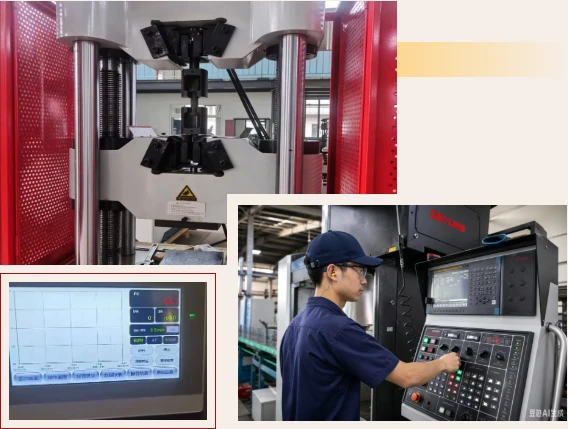
The accuracy of a testing machine depends partly on assembly and partly on the equipment itself.
Production keeps a register of production and special equipment - overhead cranes, forklifts, CNC machines - inspected every two years, with calibration, repair and maintenance records kept complete. Electricians, forklift operators and other special-operation staff hold valid certificates, and safe operating rules are assigned to named individuals.
In the operational status check, workshop records were complete, production plans were met on schedule and product sales were normal.
On environmental protection, this audit did not cover a dedicated environmental assessment; the company complies with the requirements of the local authorities. Stating the situation factually, without exaggeration or avoidance, is itself an expression of the standard's risk-based thinking.
Whether a system truly works is finally judged in the workshop: are the machines running, are orders delivered on time, to quality and in full, and is the customer satisfied?
Closing meeting: customer satisfaction is the only acceptance criterion
At the closing meeting the audit team reported its findings, commended the completeness of the system documentation and the traceability of process records, and offered suggestions for improving the consistency of a few individual records.
The company stated that it will rectify and verify each item in turn, and embed the requirements of the standard in daily processes.
From a certificate to a daily routine
An ISO 9001 certificate is valid for three years. Certified organisations undergo an annual surveillance audit, and a full re-certification audit and a new certificate before the three-year expiry. If audits are not completed on time, the certificate is suspended or withdrawn.
From first certification in 2019 to today - seven years - Jinan Nake has turned a standard into actions repeated on the production line every day.
Certification is not a plaque on the wall; it is a set of processes that must run every day.
For Nake's customers, this means that every testing machine leaving the factory is traceable across the whole chain from design and manufacturing to delivery, with closed-loop records of key processes, inspection data and corrective actions - quality that stands up to verification, wherever the machine is put to work.
What the renewal means for our partners
Eligibility without gaps.
A valid certificate keeps Nake on approved-supplier lists and eligible for tenders that treat ISO 9001 as a mandatory qualification. No suspension, no gap period, no re-qualification exercise for existing customers.
One standard, every machine.
Whether an order covers a single unit or a batch, the same procedures govern contract review, purchasing, assembly, inspection and release. Quality is a repeatable output of the process rather than the work of a particular shift.
Records you can actually ask for.
If a customer, a distributor or a notified body wants to know how a machine was built and tested, the record exists and can be produced: the approved drawing, the incoming inspection data, the in-process records, the indication-error results, the inspector's name and the date.
Complaints that close the loop.
Feedback is not filed and forgotten. It is traced to root cause, corrected, and re-verified - and the verification is recorded until the customer confirms the issue is resolved.
Improvement as a habit, not an event
The standard's risk-based thinking is easy to quote and harder to practise. In day-to-day operation it shows up in small, unglamorous ways: identifying which supplier represents the greatest quality risk before placing an order, deciding which measurement needs a second check, and recording a near-miss while it is still cheap to fix.
Audit findings, customer complaints and internal nonconformities all feed the same improvement loop: cause, corrective action, verification, and a revised procedure where one is needed. The point is not to pass an audit once, but to make the next audit find less to correct.


