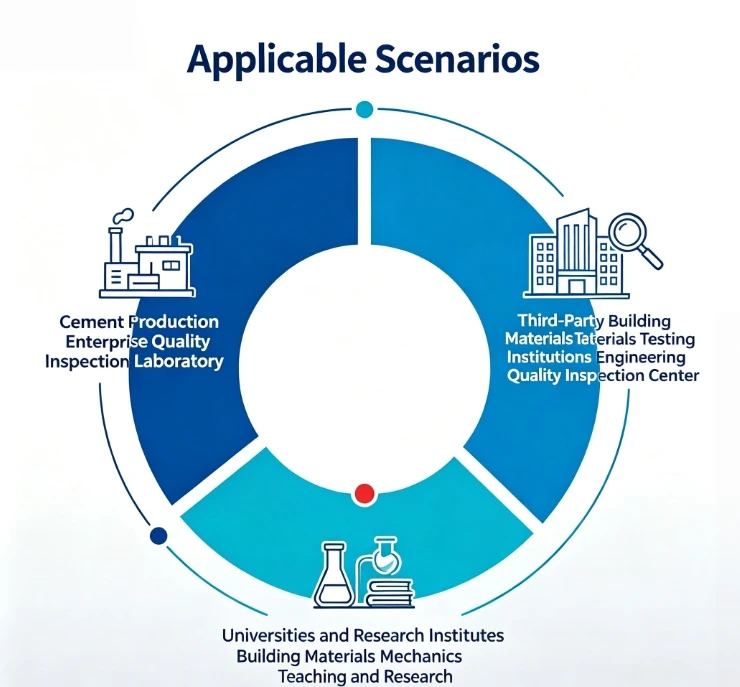

How to select cement testing equipment for labs with limited space and budget?
Jinan Nake Test Equipment Co., Ltd.
For daily tests in cement quality inspection laboratories, construction engineering labs and third-party testing institutions, hydraulic cement flexure & compression machines are plagued by oil leakage, high noise and cumbersome maintenance - a long-standing headache for many lab technicians.
Jinan Nake Test Equipment proudly launches the Electromechanical Cement Compression and Flexural Integrated Testing Machine (300kN/10kN). Driven by motor and precision ball screw, it requires no hydraulic oil or oil replacement. Featuring two independent test stations, this single machine can complete the full set of strength tests for cement mortar flexure and compression, fully complying with GB/T17671 Test method of cement mortar strength (ISO method).
Core Advantages
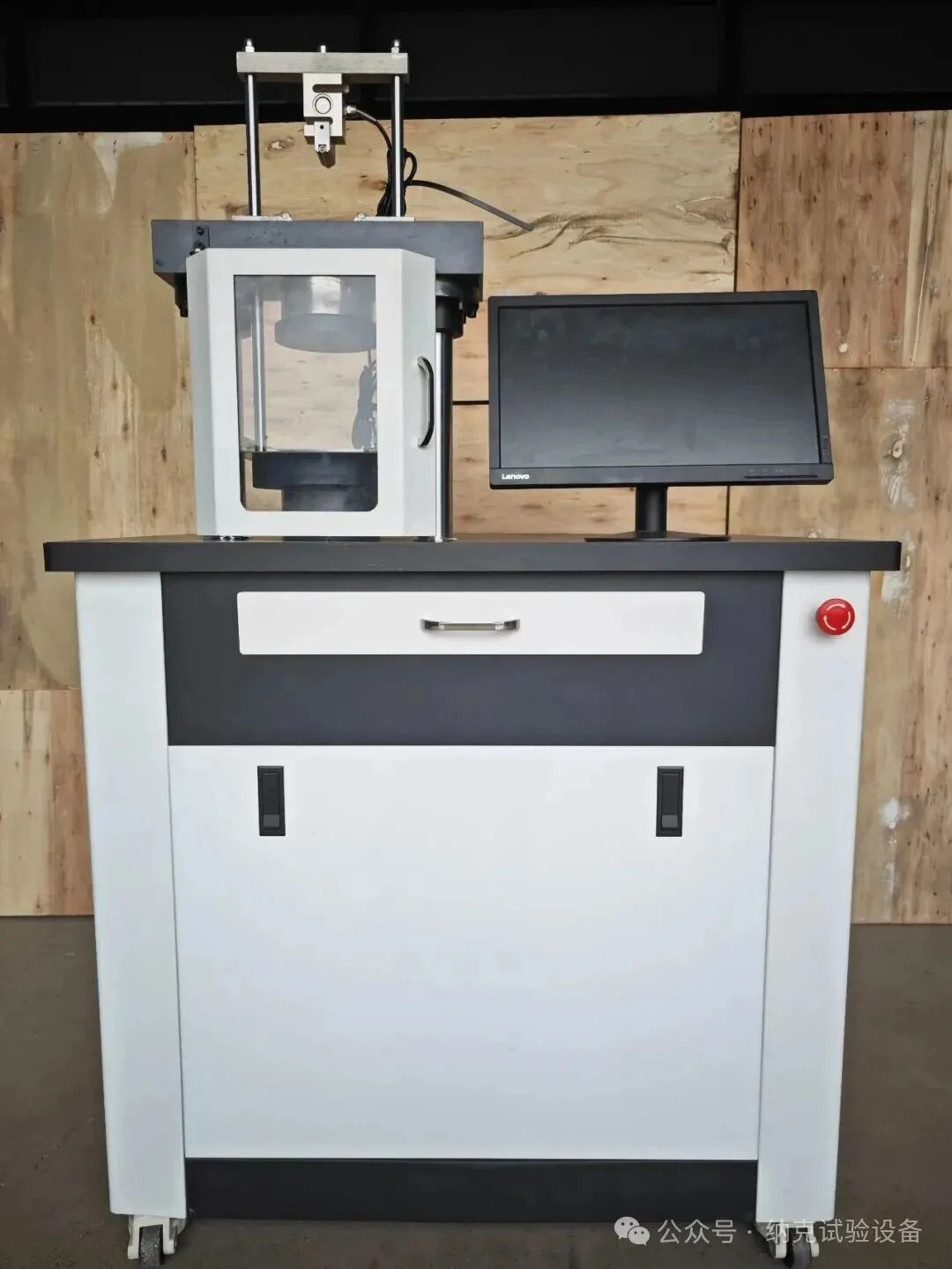
01 🔹 Electromechanical loading, no hydraulic system, maintenance-free.
Abandoning the traditional hydraulic cylinder design, it adopts closed-loop drive with motor and precision ball screw. There are no common faults such as hydraulic oil leakage or valve block clogging. It runs quietly and keeps the laboratory clean and tidy, greatly cutting long-term maintenance costs.
🔹 Dual-range & dual-station design: 300kN for compression +10kN for flexure, all-in-one unit.
Two independent test chambers without mutual interference. One machine serves two purposes, saving the budget for purchasing two separate testers and precious floor space in compact laboratories.
Compression station: Max. test force 300kN, for compressive strength test of cement mortar specimens
Flexure station: Max. test force 10kN, for three-point bending test of cement prisms (40×40×160mm)

🔹 Class 0.5 force measurement accuracy, stable constant-stress loading for reliable and compliant data.
High-precision dual-sensor acquisition, full-range measurement without range switching. Closed-loop force control maintains the loading rate strictly per national standard, delivering smooth loading without impact or overshoot. Test data boasts good repeatability and meets the data traceability requirements of CNAS laboratories, mixing plants and cement factory quality inspection departments.
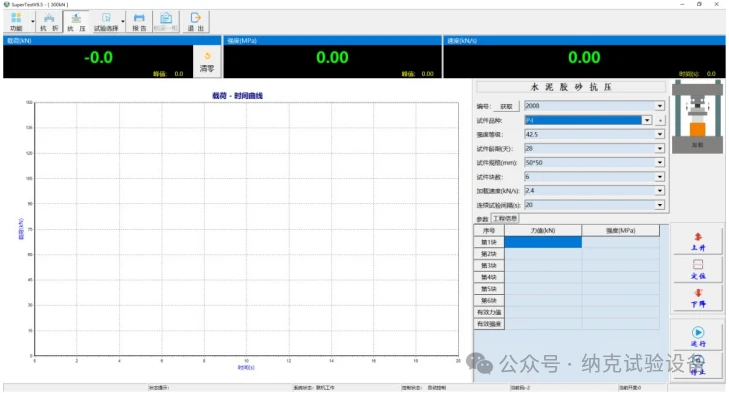
🔹 Intelligent measurement & control software: automatic test, one-click report generation. Comes with dedicated tester measurement & control system. It automatically collects load and curves and stops when specimen fracture occurs. It automatically calculates flexural and compressive strength, supports data storage, Excel export and printing of standardized test reports.
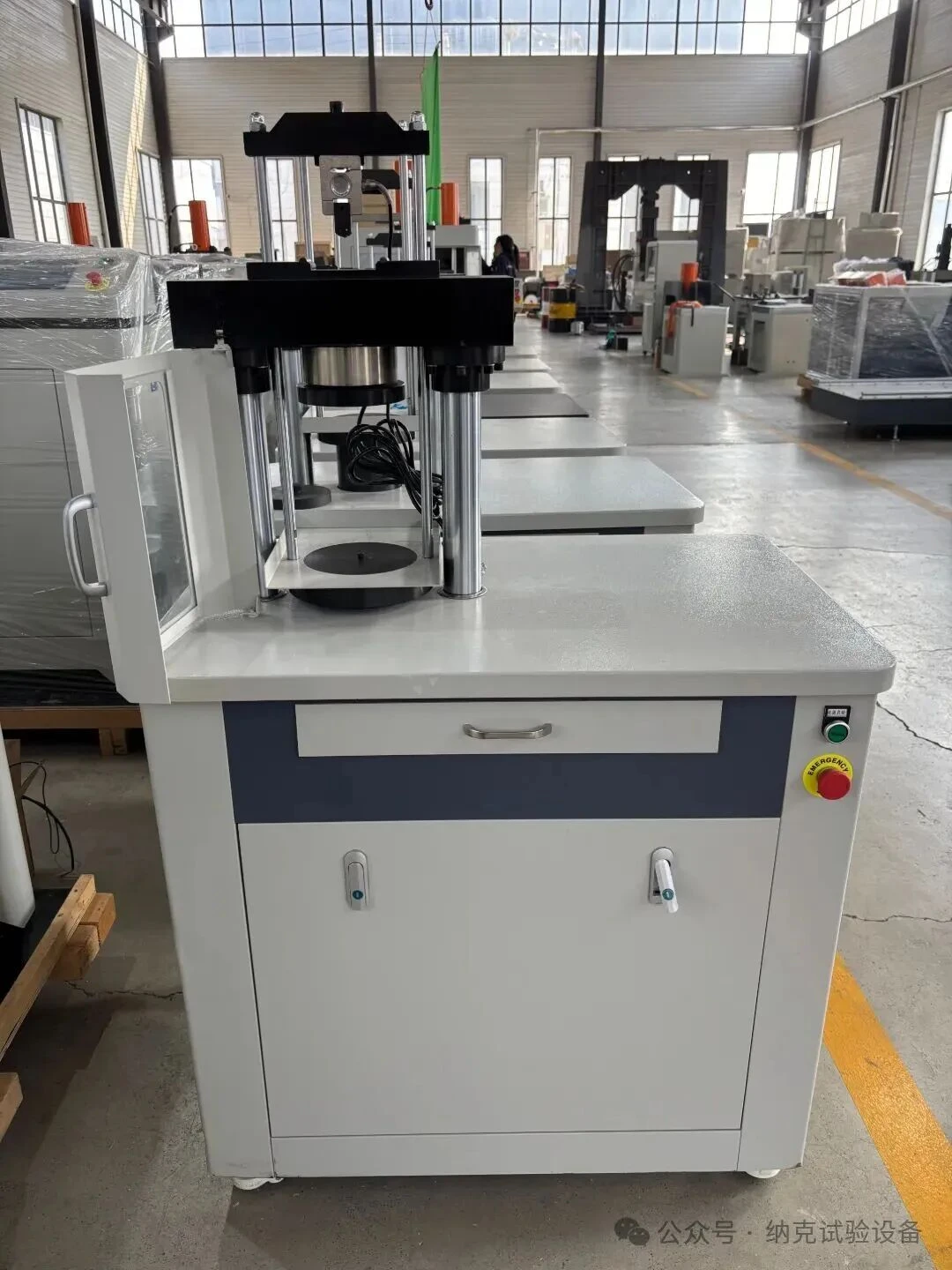
🔹 Multiple safety protections for safer operation.
Equipped with overload protection, displacement limit protection, emergency stop button and transparent safety guard door, it effectively blocks broken fragments when specimens crack to protect operators. The frame adopts high-rigidity gantry structure with minimal deformation under heavy load for stable performance over long-term tests.
Technical Parameters Table
| Compressive Strength Test | Flexural Strength Test | ||
|---|---|---|---|
| Maximum Test Force | 300 kN | Maximum Test Force | 10 kN |
| Constant Loading Rate | 0.3 kN/s ~ 9.9 kN/s | Constant Loading Rate | 0.05 kN/s |
| Distance Between Upper and Lower Platens | 230 mm | Specimen Side Length | 40 mm |
| Diameter of Bearing Plate | Φ120 mm | Span Between Supports | 100 mm |
| Maximum Lead Screw Stroke | 90 mm | Maximum Lead Screw Stroke | 70 mm |
| Testing Machine Indication Accuracy | Overall Machine Parameters | ||
| Relative Error of Indication (Accuracy) | ±0.5% | Lead Screw Motor Power | 750 W |
| Relative Repeatability Error of Indication | 1.0% | Power Supply | 220 V |
| Relative Zero Return Error | ±0.1% | Overall Dimensions | 1200 × 560 × 1480 mm |